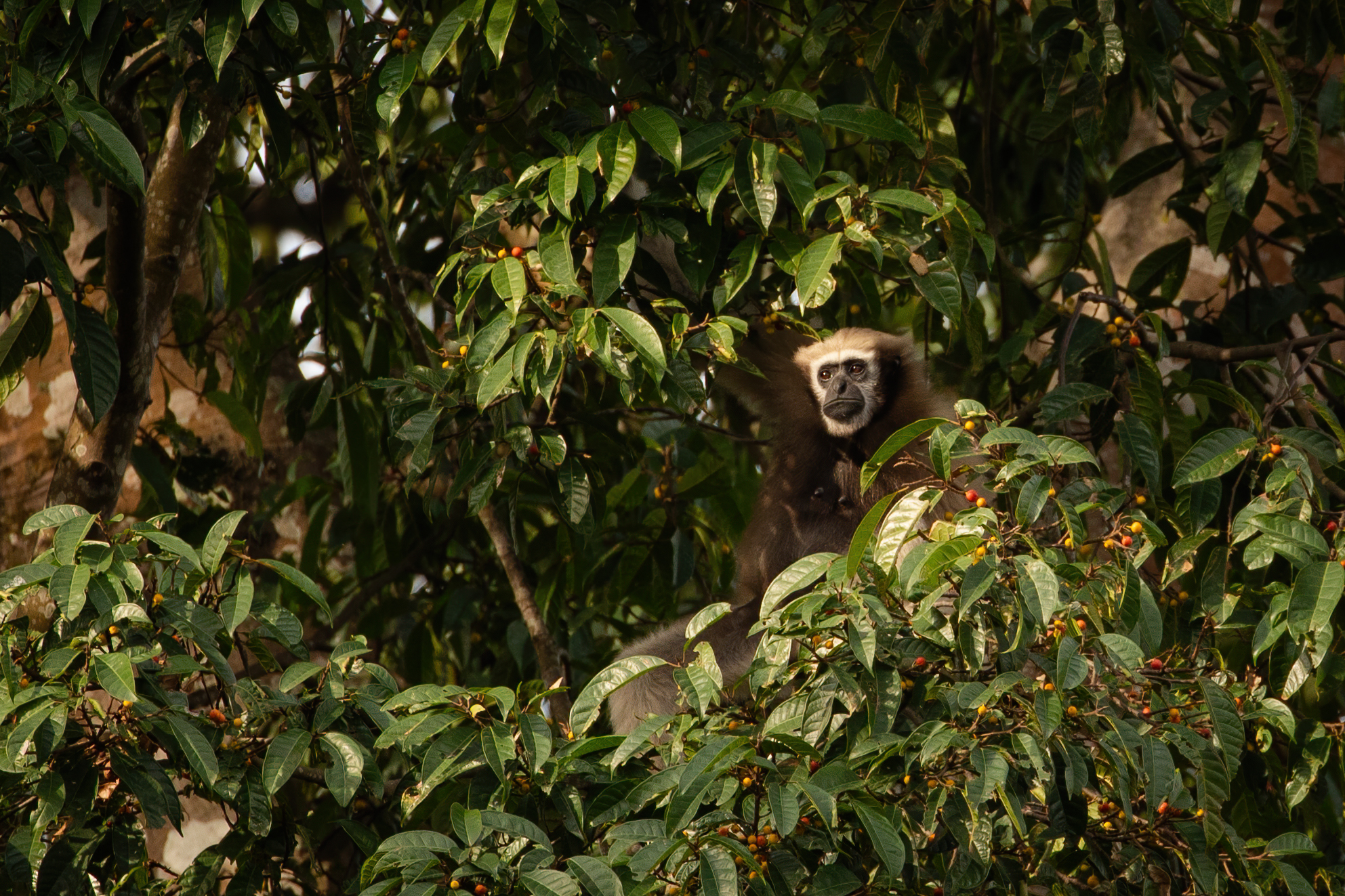
Our program promotes the coexistence between communities and wildlife in the Batang Toru Ecosystem, home to the world’s most endangered great ape: The Tapanuli Orangutan, as well as two associated Gibbon species.
The underlying story is of a shared landscape, and our initiative strives to maintain habitat connectivity in key landscape corridors. We encourage farmers to adopt sustainable land use practices while emphasizing no encroachment into designated forest areas.
Our approach links commodities, such as coffee, directly to the protection of orangutans and gibbons through the improved livelihoods of stakeholders. And we are proud to say 100% of profits go directly to the farmers.
Apes For Apes Packaging, sold at The Coffeenatics, Photo: The Coffeenatics
Currently, the village enterprise consists of 7 members (of which 6 are women) and 18 associated farmers. With training by Lisa & Leo Organics, the group has been able to produce coffee that meets Specialty Coffee standards and is already being sold to a roastery and café in Medan, The Coffeenatics. Furthermore, we have established a partnership with the Singaporean company NoFilter, which has committed to purchasing all coffee produced and supports the scale-up in production.
The coffee project has been operational for less than a year, and through this process we’ve discovered that there are many layers that need to be considered when building a successful village enterprise. First and most importantly, there needs to be guaranteed market access to motivate people to put in extra effort to produce high-quality products. Additionally, there needs to be a strong ecosystem of actors who believe in the mission of conservation and farmer empowerment, consisting of farmers, buyers, and technical experts. Last but not least, it requires time, resources, and real commitment from all the stakeholders.
We are proud to say that we have all the pieces in place as we have the farmers’ motivation, market partners in Coffeenatics and NoFilter, and technical experts with Lisa & Leo Organics, to grow the project and really prove that a win-win for wildlife and farmers is possible. Now we need to show that it can be done on a larger scale and be sustained to make an impact for local people and endangered great and small apes.
One of our stakeholder farmers showing off his coffee crop, Photo: The Coffeenatics
Based on our farmer interviews and field observations the farmers are happy to have orangutans and gibbons around their land as they do not cause any harm and they understand the conservation marketability. It feels very rewarding when we sit with the farmers outside their homes and a Siamang family casually swings by, with both farmers and Siamangs showing they’re at ease with each other’s presence.
Really enjoyed reading about the Apes for Apes Coffee initiative and how coffee can help support local farmers while protecting important wildlife habitats. It’s a great example of how sustainable coffee projects can create benefits for both communities and conservation.
I recently published a detailed guide on **Sturbridge Coffee House**, covering its menu, coffee drinks, breakfast options, prices, locations, and hours. It may also be useful for readers interested in exploring different coffee businesses and coffee culture:


One Response
Really enjoyed reading about the Apes for Apes Coffee initiative and how coffee can help support local farmers while protecting important wildlife habitats. It’s a great example of how sustainable coffee projects can create benefits for both communities and conservation.
I recently published a detailed guide on **Sturbridge Coffee House**, covering its menu, coffee drinks, breakfast options, prices, locations, and hours. It may also be useful for readers interested in exploring different coffee businesses and coffee culture:
https://coffeedrinklab.com/sturbridge-coffee-house/
Thanks for sharing this inspiring coffee and conservation story!