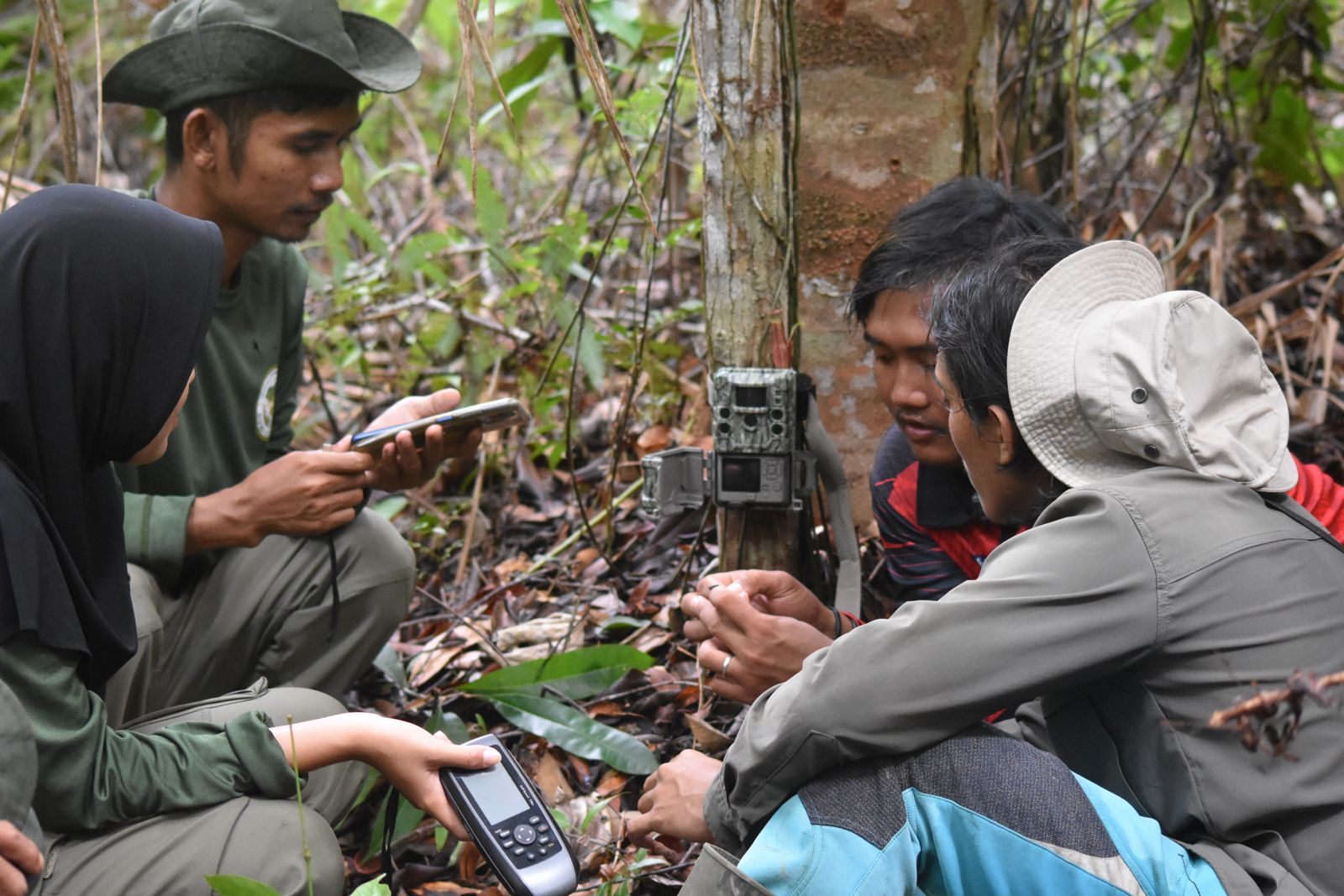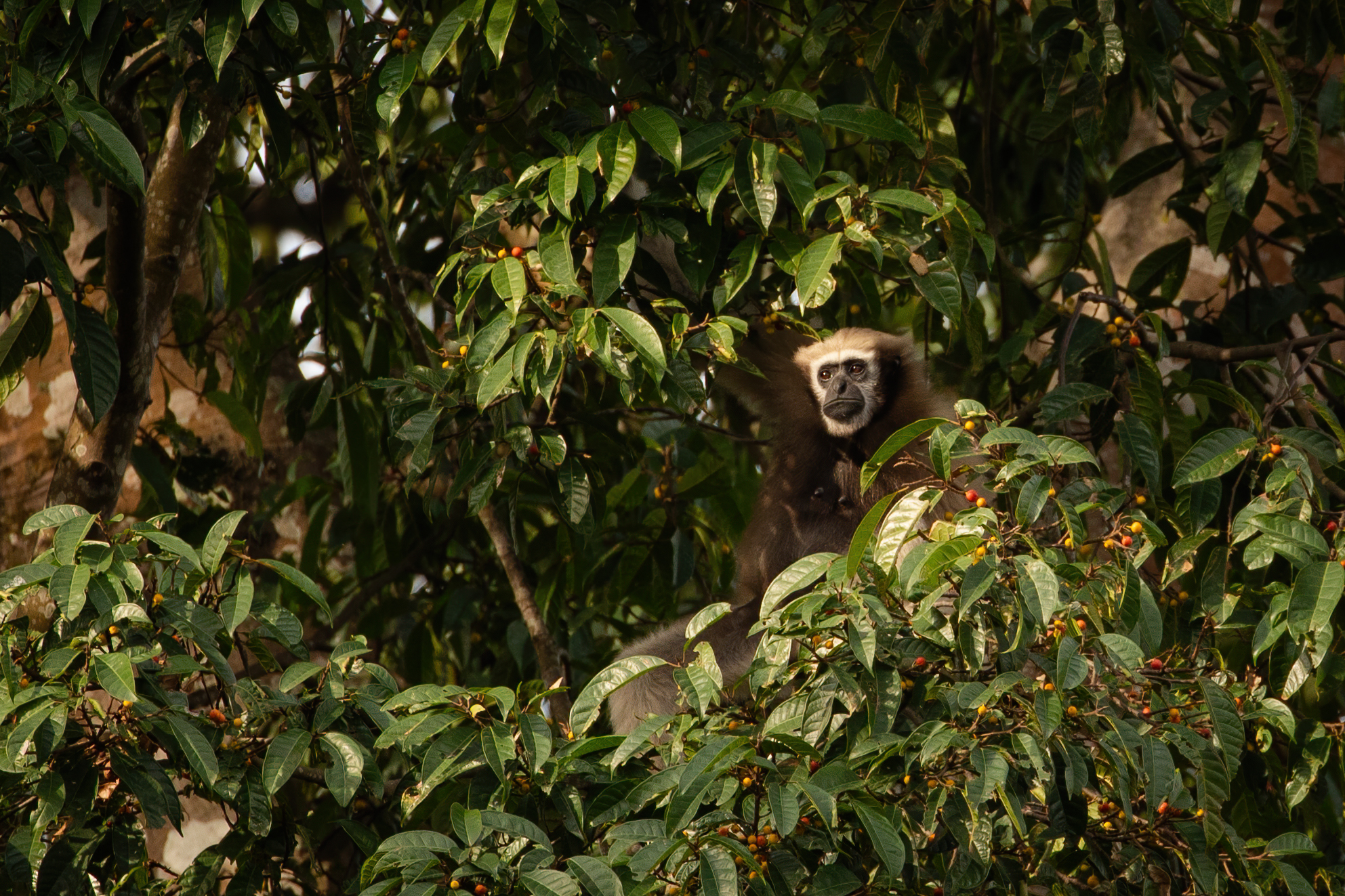
In Bangladesh’s Sangu-Matamuhuri Forest Reserve in the Chittagong Hill Tracts, five Mro indigenous villages are home to some of the most remote and underserved communities in South Asia and globally endangered wildlife such as the Western Hoolock Gibbon, Asian Giant Tortoise, and Asiatic Black Bear. Creative Conservation Alliance (CCA) has spent years building the trust needed to work in this landscape. Now with support from the UK government’s Darwin Initiative, CCA is linking human health with conservation outcomes.
The Survey Said: Healthcare and Livestock Support are the
biggest needs
In January 2026 Creative Conservation Alliance (CCA) conducted a comprehensive socio-economic baseline study across five project villages — 97 households, approximately 638 people. The methodology was rigorous: household surveys through Kobo Toolbox combined with focus group discussions in each village, building a complete picture of livelihoods, food security, health, and forest use that is informing the overall livelihood support and conservation strategy.
The findings were unambiguous. When communities were asked what they needed most, two needs dominated every conversation across every village, regardless of size, location, or tribe.
The survey recorded poultry mortality rates exceeding 56% and pig mortality above 59% annually — more than half of every family’s small livestock dying each year from entirely preventable diseases, with no veterinarian support. Healthcare was similarly dire: 73% of households had never once visited a health camp or a doctor. Many had never received any health education at all.
The villages are isolated by geography — some 15 kilometres from the nearest paved road — but the deprivation is not simply a matter of distance. It reflects decades of structural neglect of indigenous communities in the Chittagong Hill Tracts (CHT), where the Mro and Tripura peoples remain among the most marginalised in Bangladesh.
Around 95% of households depend on Jhum — traditional shifting cultivation — as their sole income source. About three quarters cannot meet their annual food needs. The forest is not a leisure resource for these communities. It is their safety net and wildlife serves as an important protein source.
The Theory of Change Is Not a Theory Here
Conservation programmes in landscapes like the CHT often approach communities as a problem to be managed: the people hunt the animals; therefore, the people must be stopped. CCA’s approach inverts this entirely. The baseline data confirms what CCA has always believed — that hunting and forest pressure in these villages are symptoms of poverty, not expressions of indifference to wildlife.
The evidence is clear: 73% of households consumed wild meat at least once in the past year. But the focus group discussions tell the story behind that number. Hunting is a fallback — for protein when livestock die, for income when crops fail, for food during the hungry season before harvest. When asked why they hunt, people talk about their dead chickens, their sick pigs, their children going hungry. They are not wildlife traffickers. They are families making impossible trade-offs.

The Theory of Change in Plain Language
If communities have reliable livestock that survive, they need less wild protein. If they have access to healthcare, they are less desperate for cash from wildlife sales. If they manage their own forest through a formal governance structure, they have a stake in what lives inside
The project is designed around this logic across all four outputs: establish community-based forest governance, improve livelihoods directly (agriculture, livestock, healthcare), reduce hunting of threatened wildlife through monitoring and community agreements, and engage government to formalise community rights. No single output works without the others. That integration is what makes this a genuine conservation programme rather than a species rescue operation with a livelihoods annex bolted on.
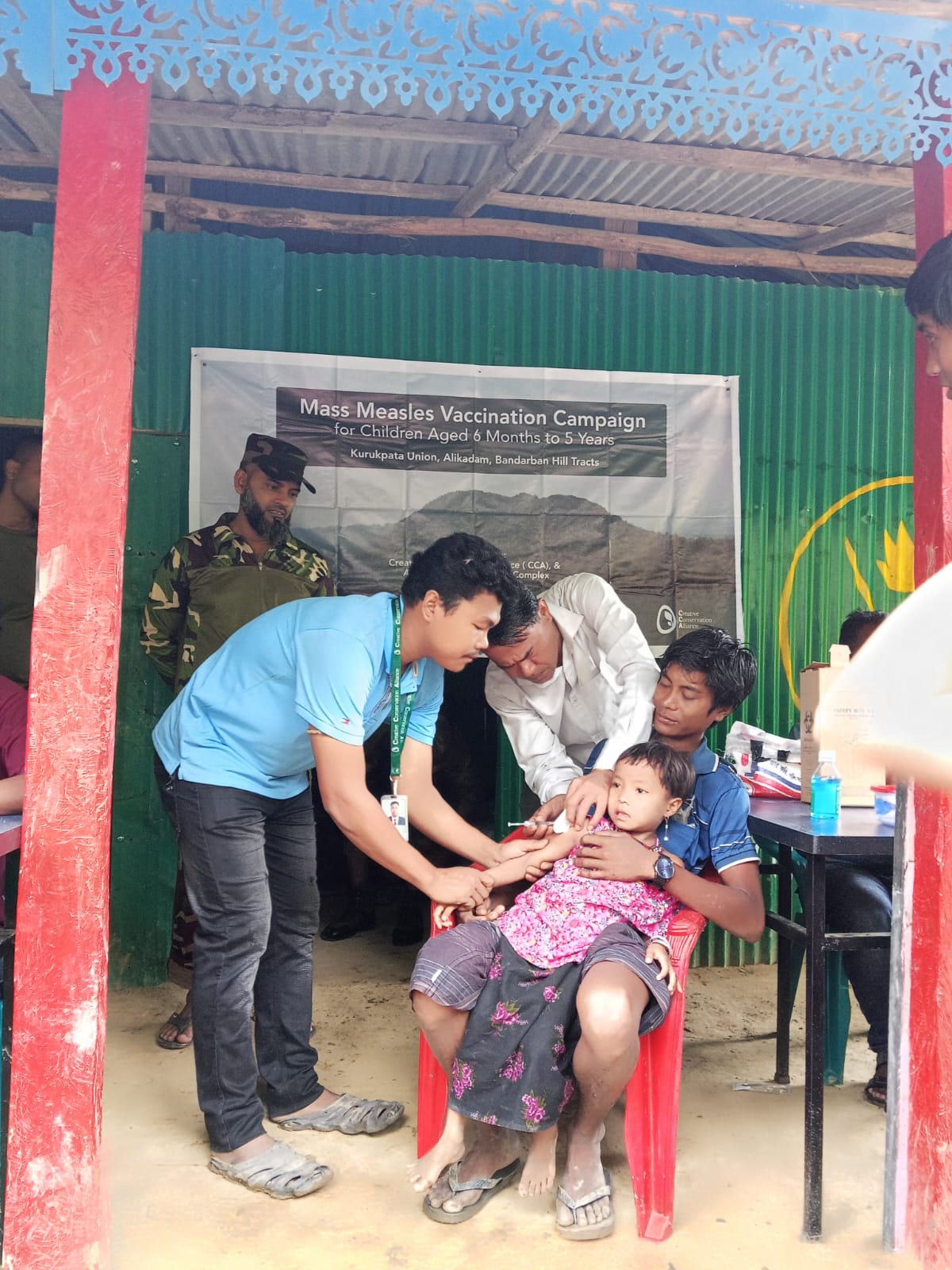
Year 1 delivered the first tangible proof of concept. With the baseline complete and agreement for the project secured across all five villages, CCA’s veterinarian delivered vaccination campaigns across every community — 11 cattle and 17 goats vaccinated against Black Quarter and PPR, the first veterinary services these villages had ever received. Medical camps attended by 257 community members (137 male, 120 female) — approximately 40% of the total population — were delivered in February 2026.
These were not symbolic gestures. They were the opening fulfilment of a promise that, if kept consistently, will change the relationship between these communities and the wildlife around them.